Compass Reg
Speak with our team
Thank you! Your submission has been received!
Oops! Something went wrong while submitting the form.


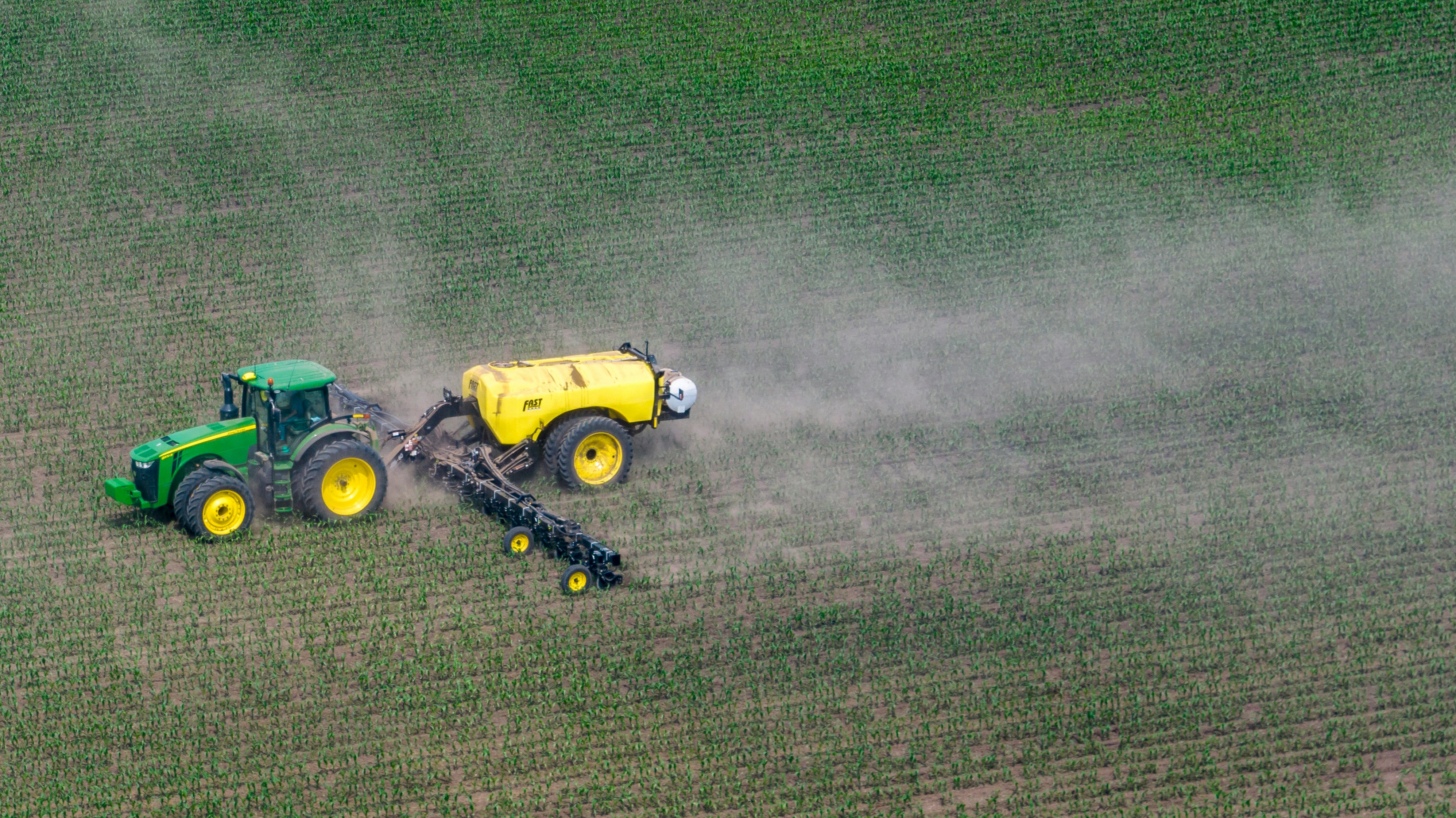


There are multiple different major categories of crop inputs, such as:
Each of these product categories has different requirements for registration with both the federal and state regulators in the agriculture space.
Additionally, these product categories are typically different between use cases. For instance, two major use cases include agricultural uses, which are crops grown for food, feed, fiber, seed, or commercial production, and non-agricultural uses, which include turf, ornamentals, rights-of-way, industrial sites, structural pest control, aquatic sites, and similar settings.
One major consistency between all categories is that each product category has some version of what is called a product label, which provides critical details about the usage and compliance of the product.
A crop input label, whether a pesticide label, fertilizer label, or seed tag, is a document that dictates how, when, and where a product can be applied, safely and effectively. The vast majority of labels, and all pesticide labels, are reviewed by regulators before being approved for sale and use in a specific geography. A label includes many things, which we detail in the next section.
For pesticides specifically, which are heavily regulated, the primary federal law regulating pesticide labels is the Federal Insecticide, Fungicide, and Rodenticide Act (FIFRA). FIFRA is the federal law that governs the registration, distribution, sale, and use of all pesticides in the United States, and as we will discuss in this article, labels are a critical element of that process.
There can be a number of different types of labels, even for one product, especially for pesticides. Each product category may have several of, or more, of the below labels.
Labels can vary by geography, registration status, and use, so maintaining accurate and current label data is one of the most important challenges in managing a crop input product database.
Crop input labels carry very specific information on how, where, and when a product can be used, especially for pesticides. This will differ by product category. For instance, a pesticide label includes:
A signal word is a mandatory EPA-required term, printed in all capital letters on the front panel of a pesticide label, that indicates the product's acute toxicity and hazard potential to humans.
Two systems regulate signal words: EPA (under FIFRA) and OSHA's Hazard Communication Standard, aligned with the Globally Harmonized System (GHS).
EPA: three signal words based on acute toxicity: DANGER (Toxicity Category I), WARNING (Category II), CAUTION (Categories III and IV). Category I products highly toxic by oral, dermal, or inhalation exposure must also display POISON with a skull-and-crossbones symbol (DANGER–POISON).
OSHA/GHS: two signal words: DANGER and WARNING, covering a broader range of hazard classes, including flammability, corrosivity, acute toxicity, carcinogenicity, reproductive toxicity, respiratory sensitization, and environmental hazards.
The EPA signal word appears on the pesticide label (including master and specimen labels); the OSHA/GHS signal word appears on the Safety Data Sheet (SDS). Many countries have adopted GHS for workplace hazard communication, using GHS signal words on SDSs and sometimes product labels.
A fertilizer label's guaranteed analysis is the manufacturer's guarantee of the minimum percentage of each nutrient claimed in the product.
The label also displays the fertilizer grade: the percentage of Total Nitrogen (N), Available Phosphate (P₂O₅), and Soluble Potash (K₂O), the primary macronutrients, always in N-P-K order. Secondary nutrients and micronutrients are listed separately in the guaranteed analysis.
The grade is typically (and in certain geographies, mandatorily) expressed in whole numbers, such as 10-20-0. Specialty fertilizers may use fractional units when a primary nutrient is below one percent.
The guaranteed analysis may also list secondary nutrients like Calcium (Ca), Magnesium (Mg), Sulfur (S), and micronutrients: Boron (B), Copper (Cu), Iron (Fe), Manganese (Mn), Molybdenum (Mo), and Zinc (Zn).
Labels must also include a derivation statement listing the source of each claimed nutrient, the name and address of the registrant, distributor, or manufacturer, and the net weight. Labels may include use directions (rates, timing, target crops), storage and handling instructions, and other information for safe and effective use.
Labels are the foundation for compliant, safe, and effective use of any given product. As laid out in the above section, labels provide very specific instructions on how, when, where, and under what conditions a product may be used. They help users:
As a result of that, label information being readily available to those that use these products is absolutely critical. Labels are regularly updated to reflect new registrations, revised use patterns and restrictions, or regulatory changes, so maintaining access to current label information is essential for accurate decision-making and compliance.
Using outdated crop input label information can lead to significant compliance, safety, agronomic, and business risks, since labels are regularly updated to reflect new regulations, restrictions, and use patterns. Risks include, but are not limited to:
A crop input product database is an aggregation of products within specific (or all) crop input categories and geographies. A database not only encompasses all of the PDF labels and relevant product documents (such as SDS, 2ee, and others), but all of the underlying data that goes into those labels and documents. The information can then be extracted, validated, and organized into a structured data model that enables users to search, compare, analyze, and integrate product information efficiently.
Data standardization is the process of taking information that is written, structured, or named in different ways and converting it into a consistent, unified format using a consistent vocabulary so it can be reliably stored, compared, and used across systems.
Standardization matters because it:
Without standardization, the same concept may appear in many inconsistent ways across labels, documents, and manufacturers. This makes it difficult to search accurately, compare products, aggregate data across sources, integrate with other software systems, and run analytics or AI models.
As the volume and complexity of crop input data continue to grow, standardized data becomes critical for manufacturers, distributors, retailers, software providers, agronomists, growers, and others using crop input data. A well-maintained crop input database transforms thousands of individual documents into an accurate, up-to-date, and actionable source of product intelligence.
For example, one product label may list “soybean,” another “soybeans,” and a third may reference the applicable crop group. Standardization ensures these references are linked to the appropriate crop entity, promoting consistency, normalization, and interoperability across products, labels, and systems.
Compass Reg has developed the leading crop inputs database in North America. By combining nationwide regulatory expertise with AI-native data architecture, we provide the most standardized, actionable, and scalable regulatory intelligence in the market.
Compass extracts data in a highly accurate manner, using a combination of digital technology and agronomic experts (PhDs, PCAs, former educators, and government professionals for domain knowledge) who have a collective hundreds of years of experience working with crop input product data. Compass' AI-driven extraction reduces human error and accelerates timelines while normalizing unstructured text.
To keep records current and compliant, the database draws on a combination of sources:
Publicly available sources such as:
Our database includes crop input data such as:
This is a subset of data elements. Contact us for a complete list. The Compass database is made available through modern APIs.
Product databases and the information within them can be used to facilitate a range of different workflows. Critical user buckets include:
Through the Compass Reg Crop Input Database, you get access to a large percentage of the market users of key crop inputs. Some of the largest farm management systems, ERPs, CRMs, and OEMs are now using Compass Data to power their systems. This footprint now reaches more than 60% of agricultural retail locations through integrations with agronomy, FMIS, and accounting platforms.
Participation helps ensure your product information is accurately represented and widely distributed across the systems that growers, retailers, and agronomists use.
In addition to data distribution, Compass provides full product lifecycle support, from pre-registration through post-registration, helping ensure that product records remain current, complete, and aligned with regulatory requirements. This includes access to regulatory insights, ongoing label updates, and structured data maintenance that reflects changes throughout a product's lifecycle.
Compass Reg
